How to Support Vagus Nerve Health Naturally
July 24, 2026
ArthroStim Treatment Review for Gentle Care
July 26, 2026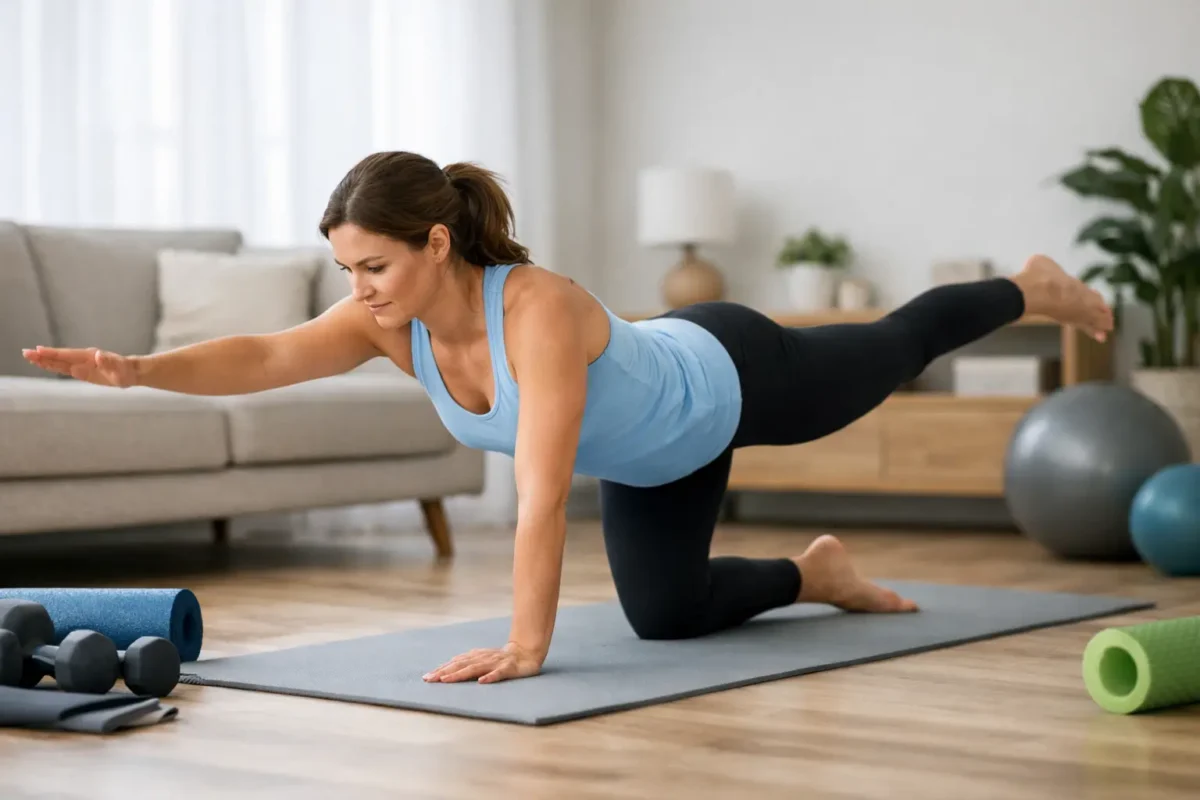
A low back that feels tight after sitting, a neck that aches by late afternoon, or a recurring flare-up during workouts can make movement feel unpredictable. The best exercises for spinal stability are not the ones that leave your core shaking from exhaustion. They are the ones that teach your body to support your spine with calm, coordinated control during the movements you do every day.
For many people, the answer is not simply doing more crunches or stretching harder. Spinal stability depends on how your breathing, deep abdominal muscles, hips, glutes, and nervous system work together. When that system is not coordinating well, the body may compensate with tension, guarded movement, or repeated discomfort.
What spinal stability really means
Spinal stability does not mean keeping your back rigid. Your spine is built to move, bend, rotate, and absorb force. Stability means having enough muscular control to keep that movement purposeful rather than uncontrolled.
Think about reaching into the back seat of your car, lifting a child, carrying groceries, or changing direction on a tennis court. Your trunk needs to respond to shifting loads while your arms and legs move. The muscles of the abdomen, diaphragm, pelvic floor, back, hips, and glutes all contribute to that response.
This is why someone can be strong in the gym and still struggle with back discomfort. Strength matters, but timing, breathing, mobility, and movement habits matter too. A personalized plan should reflect where your body is now, not where you think it should be.
Start with control, not intensity
If you have been dealing with pain, it is tempting to push through and hope a hard workout fixes the problem. But fatigue can make form disappear, especially when the body is already protecting an irritated area. Early spinal stability work should feel focused and manageable.
Use a slow pace. Keep your breath moving instead of holding it. Stop an exercise if it creates sharp pain, tingling, numbness, radiating symptoms, dizziness, or a clear worsening of your condition. Mild muscle effort is expected. Pain that travels, intensifies, or lingers is a reason to pause and seek professional guidance.
If you have a recent injury, surgery, osteoporosis, unexplained weakness, bowel or bladder changes, or significant pain after a fall or accident, do not rely on an online exercise routine alone. Those concerns call for an appropriate examination.
Best exercises for spinal stability
The following exercises train your body to resist unwanted motion while maintaining natural, comfortable movement. Begin with the versions that allow you to stay relaxed and controlled. Better form for fewer repetitions is more valuable than forcing a more advanced variation.
1. 360-degree breathing with a gentle brace
Lie on your back with knees bent and feet on the floor. Place your hands around the lower ribs. Inhale gently through your nose and allow your rib cage, sides, and back body to expand. As you exhale, lightly tighten your lower abdomen as though you are preparing for a gentle tap to the stomach.
Avoid sucking your stomach in aggressively or flattening your back forcefully into the floor. The goal is a quiet, supportive brace while you can still breathe normally. Practice five to eight slow breaths. This simple drill helps reconnect breathing with deep core support, which is often missing when people live in a constant state of stress or muscle tension.
2. Dead bug heel taps
Stay on your back with hips and knees bent to about 90 degrees. Reach your arms toward the ceiling. After a smooth exhale and gentle abdominal brace, slowly lower one heel toward the floor, then return to the start. Alternate sides.
Keep the movement small enough that your pelvis does not rock and your ribs do not flare upward. If the full version feels difficult, slide one heel along the floor instead. Try six to 10 controlled repetitions per side. The dead bug builds the ability to stabilize your trunk while your legs move, much like walking, climbing stairs, or stepping into a car.
3. Bird dog
Begin on hands and knees, with hands below shoulders and knees below hips. Gently brace your abdomen without rounding your back. Extend one leg behind you. If you can keep your trunk steady, reach the opposite arm forward as well.
Your goal is not to lift the arm and leg high. Think of reaching long from fingertips to heel while keeping your hips level. Hold for three to five calm breaths, then switch sides. Start with four to six repetitions per side. This exercise can reveal side-to-side differences in balance and control that may not be obvious during everyday movement.
4. Glute bridge
Lie on your back with knees bent and feet about hip-width apart. Exhale gently, brace your abdomen, and press through your feet to lift your hips. Your body should form a comfortable line from shoulders to knees without excessive arching through the low back.
Pause at the top for two seconds, then lower with control. Perform eight to 12 repetitions. Your glutes help support the pelvis during walking, lifting, and standing. When they are not contributing effectively, the lower back may work harder than it should. If you feel the exercise only in your back, reduce the height of the bridge and focus on a smaller, smoother lift.
5. Side plank from the knees
Lie on one side with your elbow under your shoulder and knees bent. Lift your hips so your body forms a straight line from shoulder to knee. Keep your neck relaxed and avoid letting the top shoulder roll forward.
Hold for 10 to 20 seconds while breathing steadily, then repeat on the other side. Complete two or three rounds per side. The side plank trains the muscles that help prevent the trunk from collapsing sideways, a valuable skill for carrying a bag, walking on uneven ground, or changing direction in sports.
6. Pallof press
Attach a resistance band at chest height to a stable anchor. Stand sideways to the anchor, hold the band close to your chest with both hands, and take a few steps away until there is gentle tension. With knees soft and ribs stacked over the pelvis, press your hands forward and slowly return them to your chest.
The band will try to rotate you toward the anchor. Resist that pull without twisting, leaning, or holding your breath. Perform eight to 10 repetitions on each side. This is an excellent anti-rotation exercise, but it should feel controlled rather than like a battle with the band. Use less resistance if your shoulders or low back start taking over.
A simple way to build your routine
Two or three sessions a week is a practical starting point for most people. Begin with 360-degree breathing, then choose three or four exercises that you can perform without symptom aggravation. A short, consistent routine is usually more helpful than one exhausting session followed by a week of soreness.
For example, you might do five breaths of breathing practice, six dead bug heel taps per side, five bird dogs per side, 10 bridges, and two 15-second side planks per side. As control improves, add repetitions, lengthen holds slightly, or progress an exercise. Do not advance every variable at once.
You can also bring these skills into daily life. Before lifting laundry, pause for a breath and create a gentle brace. When standing for long periods, avoid locking your knees and shift your weight naturally. When sitting at work, change positions regularly rather than searching for one perfect posture to hold all day.
When exercise needs a more personalized plan
Exercises can be powerful, but they are not a complete answer for every source of back, neck, or nerve-related discomfort. A person with hip mobility restrictions, a previous injury, altered movement patterns, or spinal misalignment may need a more specific approach before certain movements feel safe or effective.
At Core Wellness, care begins with listening to the full picture of what you are experiencing, not just where it hurts. A detailed assessment can help identify movement limitations, areas of compensation, and the type of support your body may need. Gentle, precision-focused chiropractic care and therapeutic exercise can then be coordinated around your goals, whether that means getting through a workday with less discomfort, returning to training, or keeping up with your family.
Progress should be measurable. You should understand what you are working on, why it matters, and how your plan will change as your body responds. That clarity can replace the frustration of repeatedly trying random exercises that never address the underlying pattern.
Your spine does not need punishment to become more capable. Give it consistent, well-chosen movement, respect the signals your body provides, and get individualized guidance when the same symptoms keep returning. Small improvements in control can become the foundation for more comfortable movement and a more active life.