
Family Wellness Routines That Work in Real Life
October 29, 2026
ArthroStim Versus Traction for Back and Neck Pain
November 4, 2026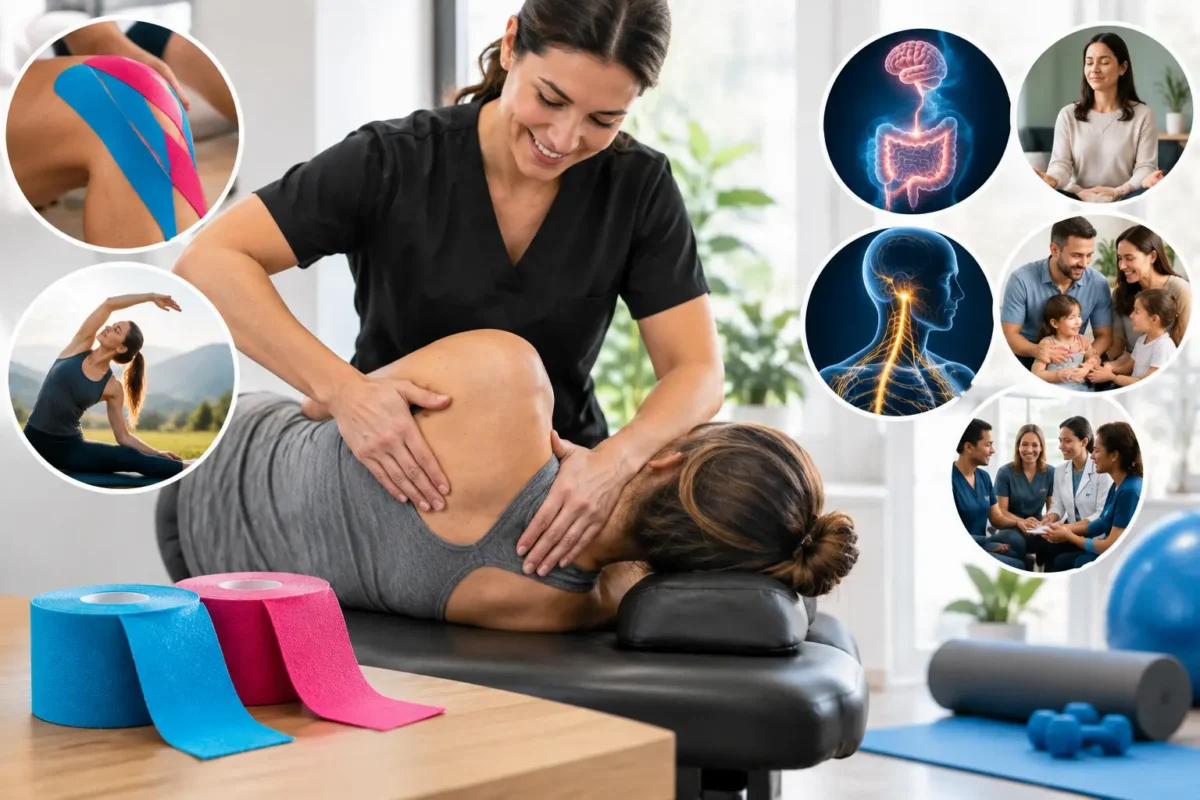
A strip of tape can look like a small solution when pain is disrupting your workday, training, sleep, or ability to keep up with your family. But the real question is not simply which tape feels better. In the conversation around TourmaTape versus kinesiology tape, the meaningful difference is how each option fits your symptoms, movement patterns, skin sensitivity, and larger plan for recovery.
At Core Wellness, we look beyond the sore spot. A tight shoulder, recurring knee pain, or nagging low back discomfort may be connected to joint motion, muscle compensation, nerve irritation, posture, old injuries, or repetitive stress. Tape can be a helpful part of care, but it works best when it supports a body that is also being assessed and cared for with intention.
TourmaTape Versus Kinesiology Tape: The Core Difference
Traditional kinesiology tape is an elastic adhesive tape designed to move with the body. It is often applied over or around muscles and joints to provide gentle sensory feedback, offer a feeling of support, and help a person stay more aware of how they are moving. Unlike rigid athletic tape, it does not aim to lock a joint in place.
TourmaTape is generally used in a similar way, but it incorporates tourmaline, a naturally occurring mineral, into the tape material or adhesive system. Tourmaline is often associated with warmth and wellness-oriented claims. Depending on the specific product, people may choose it because they prefer the feel of the tape or are interested in its mineral-infused design.
The most practical distinction is this: kinesiology tape refers to the broader category of elastic therapeutic tape, while TourmaTape is a specific type of tape with added tourmaline-based features. Both may be applied to encourage awareness and comfort during movement. Neither should be treated as a stand-alone fix for persistent pain, weakness, numbness, or loss of mobility.
What Kinesiology Tape May Help With
When applied correctly, kinesiology tape may give a person a subtle reminder to avoid a painful movement pattern. For example, someone whose shoulder rounds forward after long hours at a computer may notice the tape when they begin to slump. An athlete returning to activity after a minor strain may feel more confident with light external support while rebuilding strength and control.
Some people also report that elastic tape feels comforting around an overworked area. The tape gently lifts and moves with the skin, which may change sensory input to the nervous system. That does not mean the tape repairs a tendon, realigns a joint, or resolves the source of the problem. Its value is often in supporting better movement while the body is recovering.
Results vary. A person with mild muscle fatigue after a weekend of yard work may find tape useful for a few days. Someone with repeated ankle instability, radiating pain, or headaches tied to neck dysfunction likely needs a more complete evaluation than tape alone can provide.
The role of application matters
The effectiveness of any kinesiology tape depends heavily on placement, tension, and purpose. Applying it with too much stretch can irritate the skin or create an uncomfortable pulling sensation. Applying it without understanding the underlying issue may produce little benefit at all.
This is why a personalized recommendation matters. The same knee pain can come from very different movement problems in two different people. One person may need help with hip stability, another may be compensating after an ankle injury, and another may have irritation that requires activity modification and further assessment.
What May Make TourmaTape Appealing
People who select TourmaTape are often looking for an option that combines the familiar flexibility of kinesiology tape with a wellness-focused material. It may be especially appealing to patients who prefer non-invasive tools that can be worn during everyday activities, exercise, or travel.
Comfort is a legitimate consideration. If a tape feels good on the skin, stays in place through normal movement, and reminds you to move more carefully, it may be easier to use consistently. For an active parent, a runner managing a gradual return to training, or a professional dealing with repetitive strain, that practical support can matter.
At the same time, claims surrounding tourmaline should be viewed thoughtfully. There is limited high-quality evidence that mineral-infused tape creates unique clinical outcomes beyond the potential benefits of elastic tape application itself. Individual experiences can be meaningful, but they are not the same as proof that a tape alone is treating the underlying condition.
A responsible care plan leaves room for both perspectives. If TourmaTape feels supportive and is appropriate for your skin and condition, it may be a useful addition. If standard kinesiology tape provides the same comfort and function, there may be no need to assume that a more specialized option is automatically better.
Choosing the Right Tape for Your Situation
The best choice depends less on a label and more on what your body needs right now. Traditional kinesiology tape may be a straightforward option when the goal is gentle support and movement awareness. TourmaTape may be worth considering when you prefer its material, comfort, or wellness-oriented features and it is applied as part of a broader strategy.
Before using either one, consider whether your symptoms are simple and temporary or recurring and limiting. If pain continues to return, gets worse, travels into an arm or leg, includes tingling or numbness, or changes how you walk, lift, sleep, or exercise, that is a signal to look deeper.
Skin health matters, too. Avoid placing tape over broken skin, rashes, active irritation, or areas with known adhesive sensitivity. Remove it gently if you develop itching, burning, swelling, or redness that persists. Even a helpful tool is not helpful when it creates a skin reaction.
Tape Works Best Inside a Larger Recovery Plan
There is a reason some people feel temporary relief with tape but end up in the same cycle weeks later. The tape may reduce discomfort or improve confidence in movement, yet the drivers of that problem may still be present. Poor joint mechanics, muscle imbalance, repetitive work positions, stress-related tension, reduced mobility, and unresolved spinal dysfunction can continue to place strain on the same area.
A comprehensive approach starts by identifying what is contributing to the pattern. That may include evaluating posture, range of motion, movement control, lifestyle demands, and nervous system function. From there, care can combine gentle chiropractic support, therapeutic exercise, appropriate soft-tissue therapies, and practical guidance for home and work.
For example, tape around a sore shoulder may be more useful after the shoulder and neck are assessed, the joint is moving better, and the patient has simple exercises to reinforce that improvement. Tape for a knee may make more sense alongside hip and ankle mobility work rather than as the only response to pain after running.
This is where measurable progress matters. Relief is valuable, but so is being able to turn your head without hesitation, carry your child comfortably, finish a shift with less tension, or return to the activities that make you feel like yourself.
A Better Question Than “Which Tape Is Best?”
Rather than asking whether TourmaTape or kinesiology tape is universally superior, ask what role tape should play in your recovery. Is it helping you move with greater confidence while your body heals? Is it being used for short-term support during activity? Or has it become a way to keep pushing through a problem that deserves attention?
The right tape can be a useful tool. The right plan can help you understand why the problem started, what is keeping it active, and how to build a healthier pattern moving forward. If discomfort keeps interrupting your life, choose care that looks beyond the tape and helps your body regain the support, mobility, and resilience it was meant to have.